
Is Adventure Travel really sustainable?
I watched a video the other day, a TED talk by Shannon Stowell, the CEO of the Adventure Travel Trade Association.
The talk was titled, “Change the world… take a vacation.” In it, he gives reasons why adventure travel is good and mass tourism is bad. It was nothing new, but was nicely told and will have reached a wider audience than most of us can reach.
And it made me think. It left me feeling both positive and sad. Positive about the great things adventure travel can do, and sad about the negative things adventure travel can also do.
Sometimes adventure travel can do harm
Fair play to Shannon, he does point this out in the video. But I think it is something we need to spend more time discussing as an industry. It is really easy to say adventure travel is great, much harder to look at those instances of when it’s not so great. Just because something has an adventure travel label stuck on it, does not necessarily mean it is good.
Has adventure travel become too popular?
Every place has a limit to the number of tourists that it can cope with while still maintaining some semblance of its original charm and beauty. By pushing adventure travel into the mainstream, by making it more popular, we have in some places, overstepped that quotient.
Overtourism
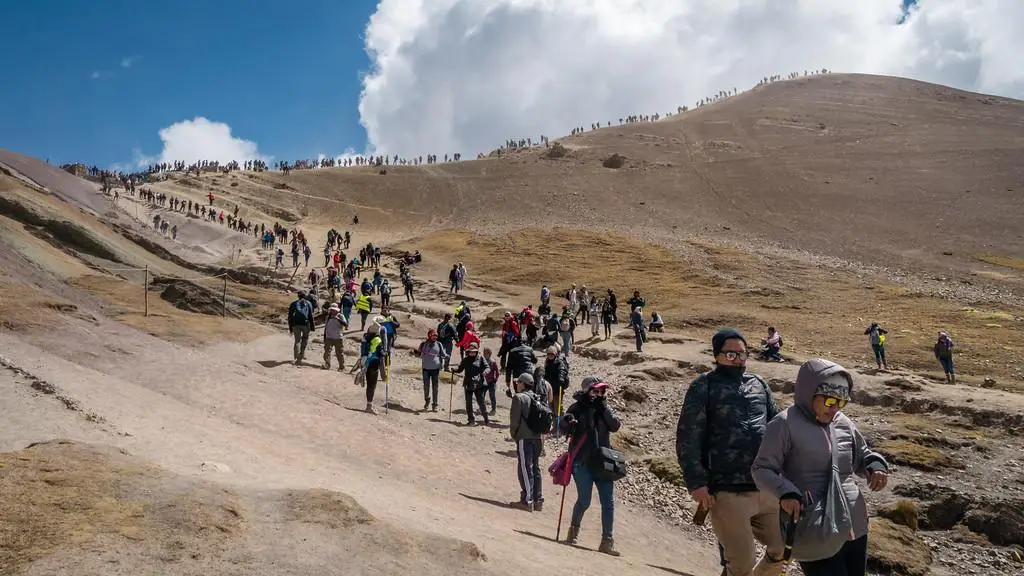
We hear all about over-tourism as a negative effect of mass tourism, Venice is the example Shannon uses in the video. But there are also plenty of incidences of over-tourism in places that mainstream tourism has never have reached, caused by adventure travel. Remember one of the advantages of adventure travel is it can reach further into rural areas and bring economic development etc. But if not carefully controlled it can also bring negative effects too.
Does everyone want tourism?
While many locals love tourism and the changes it brings, perhaps not all do. Two Cusco examples:
- Most residents in the centre have their water cut off every day because the system was not designed to cope with the number of tourists staying in hotels and their demands for water. Adventure travellers stay in hotels too, we cannot blame it all on mass tourism
- San Pedro market in Cusco- some of the stall holders are so sick of having cameras pointed at them or of groups of tourists blocking the aisles that you are likely to get a hunk of meat thrown at your head. It was not “mass tourism” that started visiting markets. They would never have gone into such a place. This was something very much started under the guise of “ adventure travel” of “real experiences” and “seeing how the locals live”.
Does adventure travel leave a higher percentage of clients money in the destination than mass tourism?
This is an argument many use as to why adventure travel is better than mass tourism. The figures say it does leave more money in the destination, but let’s be honest, a lot of money can still leak out along the way. And the bigger adventure travel becomes, the more will leak out.
Adventure travel is no longer the preserve of small specialist companies. If you don’t believe me, look at the flurry of buyouts, mergers and takeovers in our industry sector over the last few years.
It is easy to criticise Disney Cruises and the like as being big multi-nationals, taking all the profits overseas, but a lot of the main players in the adventure travel scene are also rather large and multi-national these days.
Going direct
The utopian ideal that we buy our oranges direct from the farmer, cutting out the links, thus leaving more money at the source can also be applied to the travel industry. In fact, adventure travel has often argued that this is what it does.
One of the jobs of the companies in the adventure travel industry is to acquire the expertise to advise people where to get the best oranges and help them get to that farmer so they can buy her oranges. So there are always going to be links in the chain, otherwise, that farmer is going to be sat with a field full of fantastic oranges that no-one knows about and she cannot sell. But I do feel as the industry grows, there are sometimes more links in the chain than there used to be. And with each new link, a little less of client spend stays in the destination.
The adventure travel industry often spends money in the same places as the mass tourism industry
We criticize mass tourism for spending in international hotel chains. But in the adventure travel industry, we often use those very same hotels. You book a Starwood or a Marriot- a large portion of that money is going to leave the country. It does not matter if you book it through us as part of your adventure travel tour, or through some mass tourism company- the fact remains the same.
Is the growth of adventure travel sustainable?
I am not sure it is. When adventure travel really works, both in terms of being better for the locals and creating a better experience for the traveller is when it is small scale, in my opinion. All the reports say adventure travel is on the increase (as is travel in general). Does that not inherently mean the pressure on these more out the way places that we take people to is going to increase? Are we merely creating over-tourism in different places?
Adventure travel can work very well on a small scale
My favourite ever accommodation was in Corsica, high in the mountains. We used to camp by the hut of a young shepherd couple. The girl came out one day, looked at our camp meal and said, “I can cook better than you, why don’t I cook”.
And so from then on, she did. We ate vegetables from her garden, cheese from her goats and meat from her livestock. Once a week, we sent a group to camp for a night. We then headed off leaving them in peace for the rest of the week. They made some extra money, our clients gained not only a delicious healthy meal but one of the most memorable experiences of their whole trip.
Had that been more groups, things would have started to change. She would have had less time to herd her goats, tend to her garden. They as a couple would have had less time together. It worked perfectly for both sides. One night a week they had visitors, otherwise, life carried on as normal for them and that is how they liked it. ( Famously one client asked them what they did without a television. “ We fuck” was her straight-faced reply).
Obviously, not everyone wants to be a goat herder, and there are many who want as much tourism as they can get. But this kind of small-scale tourism arrangement was, I think, on a sustainable level.
But can you maintain the same experience once a place gets popular?
Translate that shepherd experience to Peru and within a month there would be a group or two a day camping outside their door, and then another agency would come along and offer to pay for exclusive rights to camp outside their door. Soon another shepherd would build a restaurant next door.
Very soon that lifestyle they led would be changed forever. That beautiful spot they lived in would be scarred forever. And that experience that we so enjoyed, would no longer exist.
Sometimes we spoil the very thing we love
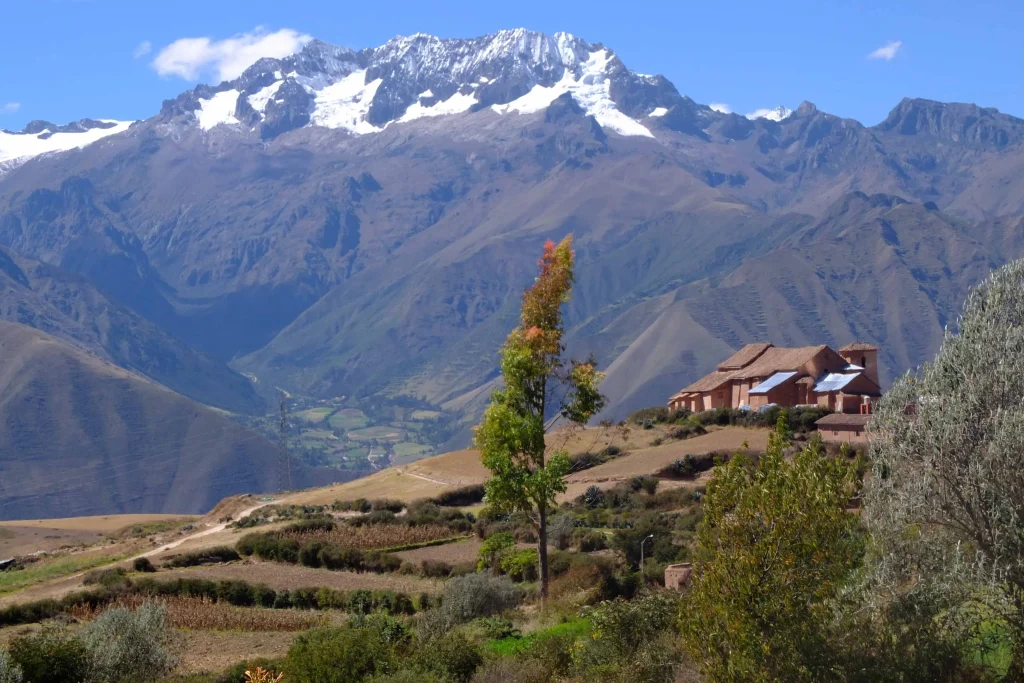
The Chinchero plateau, Maras, Moray area is a good example. Adventure travel companies decided it was a great spot for a picnic. Famous for the patchwork of coloured fields, with views of snow-capped mountain. Yet go there now, and most lunchtimes you will see lots of huge white dining tents dominating the landscape.
As the companies started trying to outdo each with ever more splendid picnic setups they forgot the very reason they took people there in the first place. Incidentally, imagine having to live there as a local and have your landscape taken over each day by this?
I am certainly not saying it is impossible to find adventure travel experiences in Peru or other popular places, but it is getting harder. It is also important to remember that most of these issues can also be a problem with tourism in our own countries. Cornwall on a bank holiday weekend, for example, suffers massive over tourism, and locals cannot afford property as it has all turned into holiday lets.
You forgot to mention the planes- most adventure travel requires flying
This I feel is the one big elephant in the adventure travel room that no-one really discusses. Encouraging people to get on a plane and travel across the world is inherently bad for the environment.
I don’t care how you spin it, our ever-growing industry is not sustainable. It does not matter if you get on a plane for mass tourism or for adventure travel, the emissions are the same.
“But I can offset my carbon,” you say! Sadly I’m not sure that’s enough.
It’s like a kid hitting someone and saying sorry but carrying on hitting them. Carbon offsetting is surely designed to make up for the damage done, not to allow you to go on doing more damage in the same way. And besides carbon emissions are only one of the issues caused by planes, there are other processes that go on that contribute to global warming when a plane flies.
So what is the solution to all this?
My daughter’s favourite hat has a picture of a bear eating a salmon, with the words “ Eat Local” on it. Perhaps we need to start thinking about “Travel Local” too.
While I think we can and often do travel local, such as with the Corsican shepherds, meaning getting closer to the source, this only works in places with relatively few visitors. Once it becomes too popular the balance changes. And that still does not solve the issue of getting on a plane.
So why not Travel Local in the geographical sense?
Travel in many ways is a state of mind.
There are some great places to go and magical experiences to be had on your doorstep, wherever you live. If you click into the travel mindset.
You don’t need to get on a plane to have an adventure, to discover something new. You can even “meet the locals” in your own neighbourhood if you are willing to try.
Close to home can also be incredibly different. Plenty of British people have travelled the world but never been to Ireland for example. And you don’t even need to take a plane to get there. You do not always have to travel far to find different cultures.
The travel local change has already happened with companies that run charity treks. They realised sending big groups overseas was not particularly viable in many ways but discovered there was an even bigger market of people looking for adventures closer to home without the need to get on a plane.
It might be a difficult reality to face, but at some point, the travel industry is going to have to wake up and realise that we cannot keep encouraging people to get on planes to far-flung destinations. At the very least, we are going to have to start flying less.
I’ll end with a piece from Yvonne Chouinard because I think he tells it like it is. It’s taken from an old article.
“We’re not going to get in an airplane and go to Tavarua in the future – we’re going to have to live with the break that’s close by, which means we’re going to have to protect it. If somebody goes to destroy that surf break there are going to be a lot of surfers that go crazy. They’re not going to allow that, because that is all we have, because we can’t fly to Tavarua anymore.
It’s the same thing with a little local stream that’s polluted – if I want to fish, I’m going to have to clean this stream up. I mean, people talk about eating locally as being vital, but it’s not just eating locally that’s important. We’re going to have to do our sports locally, we really are.
Everybody thinks there’s going to be some technology that emerges that’s going to transport us all over the world with no carbon emissions. That’s not going to happen. And you know what? You’ll get used to it.
I think I need somebody to tell me to stop travelling. If someone was to tell me, ‘No you can’t do that, because there isn’t any oil left and you’re destroying the environment,’ I’ll say, ‘Okay’.“
We at Amazonas Explorer understand this which is why continue to improve:
A short story on how we got to where we are now:
In 2007, we joined 1% for the planet and have committedto donate 1% of turnover every year to environmental causes
In 2014, we helped organise the first Queñua Raymi with the help of ECOAN, planting 56,000 queñua trees in a single day
In 2017, we calculated the amount of CO2 emissions and choose to offset them with the help of Regenera
In 2017, we also joined B-corp the first travel company in Peru to do so
In 2021, we committed to planting two trees per person per day
Paul Cripps: “I think what I’m trying to do with Amazonas Explorer is look at the long term. Currently tourism is all about how much money can I make now and the “more the merrier” policy is destroying the Peru we love. Queues everywhere, rubbish everywhere and a fight to the bottom in prices. My idea to take a step back from this . And I’ll admit, recovering from Covid we all adopted a ‘make hay while the sun shines’ mentality which now needs to go.
My vision at Amazonas Explorer is to lead the way in making tourism a force for good and mitigating the damage we are doing. Only when we achieve that can we even vaguely start using the word “sustainable” for our business.”
Beacuse of this in 2026, we launched the Positive Impact Fund
$15 per person per day will now be added to each trip which will go straight to the following:
1: 100% carbon offsetting your “In Peru” trip (including internal flights) into a Carbon sink in Manu National park through Regenera Peru
2: Planted on your behalf, a guaranteed minimum of 2 native queuña polyepolis trees per person per day in the high Andes of Peru, thus protecting vital water supplies for local communities, giving employment to 100s of local farmers, and providing the obvious reforestation and land regeneration benefits that come with mass tree plantations. Plus, there will be some more carbon capture benefits that we haven’t worked out how to calculate yet. Working with ECOAN PERU as we have done for years.
3: The remaining, roughly $10 per person per day, will be shared between 3 projects:
a: Valle Sagrado Verde: working to restore and protect the hillsides of the Sacred Valley of the Incas through Fire Prevention, Natural Regeneration and Reforestation. We are going to be one of their “Hatun Padrinos” (Top Sponsors).
Allowing us to sponsor sustainability and eco-awareness education for up to 3000 children per year, organise river bank and other cleanups in the Sacred Valley of the Incas and, hopefully, fit out and run a new “Container library” in a local community every year.
c: Peruanamente This is Michel Hediger from Arequipa’s (Zig Zag, etc.) NGO, which is conducting hands-on cleanups on a massive scale and shaming the municipalities into getting involved. For example 65 tons of rubbish were removed from the Arequipa-Colca road. The plan is for us to set up the Cusco branch with the positvie impact fund.


