
White water rafting in Cusco and Peru
White water rafting in Cusco and Peru is the perfect way to add some excitement and adrenaline to your Peru adventure (check out some of our recommended trips here!). This guide aims to outline the choice of rivers commercially available for Peru, as well as telling you how to choose a good, safe, Peru rafting operator, what you need to wear, what is provided, and a brief introduction to some of the rafting terms you might hear used.
Why is there so much great white water rafting in Cusco & Peru?
While Peru may be better known for its Inca ruins and food, the white water rafting here is some of the best in the world- particularly in Cusco. All the rain that falls on the high mountains of the Andes has to escape somewhere. And you can join it on its journey to either the Atlantic Ocean to the East or to the Pacific to the West, depending on which river you raft.
The Andes mountains were formed as a result of uplift. While their origins lie in the collision of two tectonic plates around 170 million years ago, the uplift that raised the mountains we see today started 25 million years ago. Glaciers then formed valleys. The meltwater from these glaciers, ran through these valleys, grinding out the canyons in which most white water rafting in Peru takes place today.
How hard is the white water in Peru?
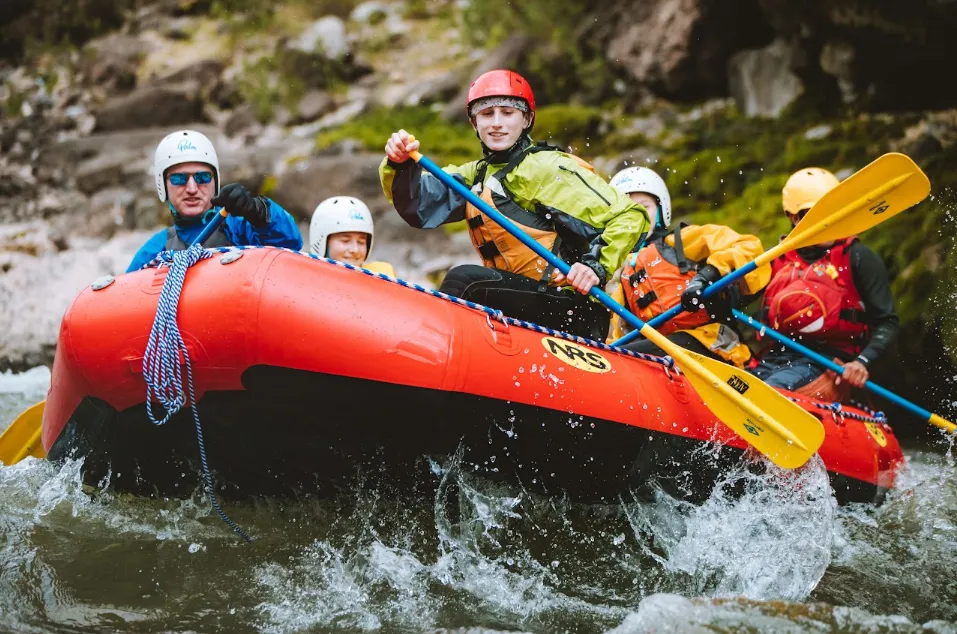
Rafting rivers are classified on a scale of Class I to VI, with Class I being almost flat and Class VI being considered too dangerous to take clients down. Most Peru rafting trips are between Class III to IV. In the rainy season, many of these rivers are not possible to go down due to water levels being too high so companies will suggest alternative sections.
When is the best time to go rafting in Peru?
The best time to go rafting in Peru depends on which river you go to. The best time to go rafting in Cusco is between May and October. The best time to go rafting in Lima is in January and February. The best time in Arequipa is June and July. Certain rivers, such as the Apurimac, are best in the dry season, as they are too big and dangerous in the rainy season. Other rivers, such as Lunahuana are best in the rainy season, as they are often too low to raft in the dry season. Each river is different.
Is white water rafting in Peru suitable for me?
- How fit do I need to be?
The easier trips do not need much fitness at all, you could technically just sit in the raft and let the guide do all the work, though that is not really what rafting is about. The fitter you are the more you will enjoy your rafting trip. The longer the trip the fitter you need to be. Paddling all day can be hard work, using muscles you are not used to using.
- Do I need to be able to swim?
You need to be confident in the water. The harder the trip, the more confident in the water you need to be. You will be wearing a lifejacket at all times. This floats you in the water and has a special piece of flotation behind your head, to keep your head above water. So you are not going to be able to swim in the traditional sense of the word.
- Do I need previous rafting experience?
For most trips, no. Check with your outfitter.
- Can you raft to Machu Picchu?
No. You cannot raft to Machu Picchu, even though the Urubamba River runs past it. The stretch of river that runs through the town of Aguas Calientes (Machu Picchu Pueblo) is impassable due to rocks. There is also a hydro-electric power station upstream, which takes most of the water out of the river. However, there are many great rivers to raft near Machu Picchu in the Cusco area.
What are the best places to go white water rafting in Peru?
The best place to go rafting in Peru depends on the kind of rafting you are looking for. You may consider the best to be a challenging multi-day expedition. Or you may consider the best rafting in Peru to be an easier river suitable for your family. It can also depend on the time of year, river levels, and where you are.
Below are what we consider to be the best rafting trips in Peru. First, the shorter trips, organized by location, Cusco, Lima, and Arequipa. And finally the big rafting expeditions such as Cotahuasi, and Marañon.
Whitewater rafting in Peru near Cusco
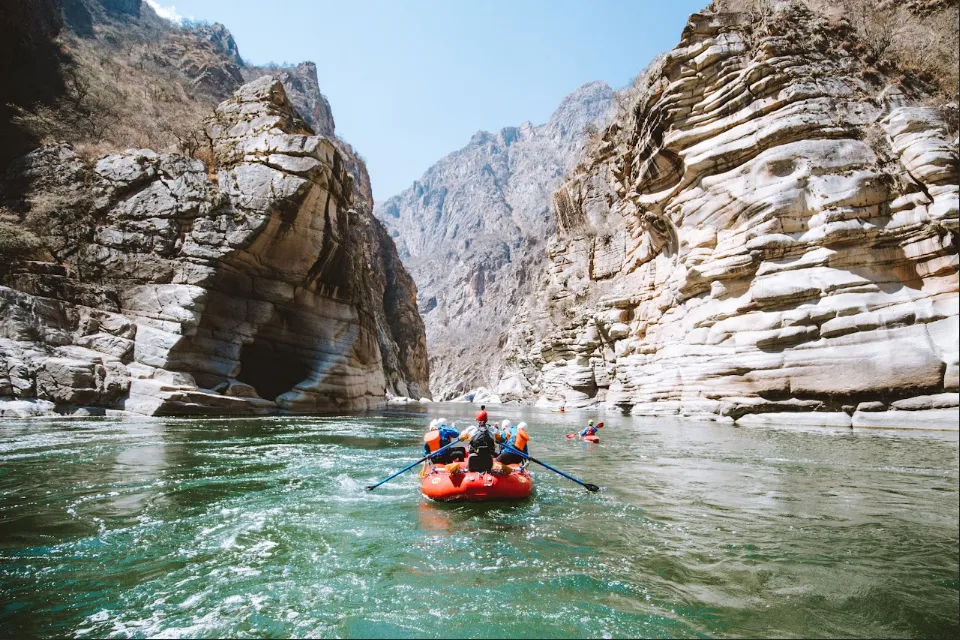
The two classic one-day rafting options near Cusco are on the Vilcanota River and the Urubamba River. But recently, some companies have started to offer an alternative one-day trip on the Apurimac River.
Vilcanota River- Class 3 to 4
Note this is also known as the Urubamba River, but its proper name is the Vilcanota River. As it enters the Sacred Valley it then becomes known as the Urubamba. Chuquicahuana is the name of the particular section.
This is a fun day out suitable for beginners aged twelve upwards. There are plenty of rapids along the way and this section of the Vilcanota River passes through a canyon where the water is funneled into the best white water rafting rapids of the day. You begin your Vilcanota River rafting trip near the small village of Chuquicahuana, on the road from Cusco to Puno, about ninety minutes outside of Cusco. You finish about one hour from Cusco.
If the water is too high or if the guides feel the group needs gentler rapids, the Cusipata section, downstream from Chuquicahuana makes for a gentler trip. Watch the video of the Vilcanota River below (even though it is titled Raft the Urubamba).
See our Rafting the Rio Vilcanota tour here.
Urubamba River – half-day – Class 2 to 3
While somehow still the most popular section of river for white water rafting in Peru, due to its location in the Sacred Valley, we do not recommend Urubamba River for health and safety reasons and we refuse to operate it. This section of the Urubamba River is heavily polluted due to the towns and villages of the Sacred Valley emptying waste and black water directly into the river. The rapids on the Urubamba River are also nowhere near as good as on the Vilcanota River, let alone the Apurimac River.
This really is a case of local operators not being honest with their clients. Yes, it fits nicely into an itinerary and as it only takes half a day it makes for a cheaper trip, but that is not an acceptable reason to allow paying clients and the rafting guides employed to take them to endanger their health by coming into contact with such polluted water.
Apurimac River – one day- class 1 to 3
This brand new option introduced by Amazonas Explorer makes an Apurimac rafting experience available to even more people. This gentler section of the Apurimac river takes you down to Cconoc with its thermal springs. This section can be run in a when the water on other sections is too high. And in lower water, it is ideal for taking smaller children, who can sit in the raft under the care of an expert Peruvian rafting guide. Or for those who want to paddle their own boat, it is suitable for confident beginners to take a single or double sit on top kayak, or even a stand-up paddleboard.
Watch our Apurimac River Rafting of this section below:
Apurimac River- one day – Class 3 to 4
The Apurimac River is the best one-day white water rafting trip in Peru, by a long way. While a multi-day Apurimac rafting trip is even better, if you are short on time, this is a great substitute. It has clean water, great rapids, and big canyonland scenery. It costs more than the previous two trips as it requires more driving and more complicated logistics, but it is well worth it for anyone looking for a great Peruvian rafting experience. Its remoteness is part of what makes it so special as well as the natural beauty of the area and the quality of the rapids.
See our Apurimac Rafting 1 Day tour here.
Apurimac River – Black Canyon – 2 days – Class 3 to 4
This is a mini-expedition, but one suitable for families with kids aged ten upwards. The rapids are fun, the beach you camp on is gorgeous and you can often see otters and condors. This trip is as much about the experience of camping out in a remote and beautiful place as it is about the rapids. The rapids are broken up by sections of flat, so should you fall out, it is easy to get back in. Thus it feels friendly and safe.
See our Raft the Apurimac Black Canyon tour here.
Apurimac River – Granite Canyon – 2 to 3 days – Class 3 to 5
This is a much harder and more serious, thrill a minute trip. While you do not need to be an expert, you must be completely confident in the water. Falling out of your boat is much more complicated than in the Black Canyon, as rapids often follow into each other in quick succession. You should be sixteen years old minimum. Clients do not run the Class V sections, you walk around while the guide either runs them solo or lines the boat down. The rocks you walk around on can be slippery and awkward, so you need to be in good physical shape.
Note for safety reasons, the Class 5 rapids will almost certainly be run by the guide alone or they may even line the boat down. This means they float the boat through the rapids on the end of a rope, with no-one in it. You will be shown the path to walk along the bank and meet back up with your raft a few meters downstream of the difficult section. Watch the video of the Apurimac River- Granite Canyon below. Note this was taken when the section was done in 4 days. Thanks to better road access it is now mostly done in 3, but if you have the time, 4 days makes it even more enjoyable.
See our Rafting the Apurimac Granite Canyon tour here.
Apurimac River – Black and Granite Canyon combined- 4 days – Class 3 to 5
If you want to maximize your whitewater rafting experience, this 4 day/ 3 night Apurimac trip is hard to beat. The easier Black Canyon lies immediately upstream of the harder Granite Canyon. So instead of getting out at the end of the Black Canyon, you simply carry on down the Apurimac River into the Granite Canyon. For those with the time, this trip allows you to warm up and hone your rafting skills over the first two days, before taking on the most challenging rapids on Days 3 and 4. Throughout the trip, you will camp by the side of the river on gorgeous sandy beaches where you are unlikely to see any other tourists.
Note for safety reasons, the Class 5 rapids will almost certainly be run by the guide alone or they may even line the boat down. This means they float the boat through the rapids on the end of a rope, with no-one in it. You will be shown the path to walk along the bank and meet back up with your raft a few meters downstream of the difficult section. If you are considering this trip we recommend contacting us.
White water rafting in Peru near Lima
Lunahuana – half day- class 2-4 ( different sections available)
3 hours south of Lima, Lunahuana rafting is a very popular activity with the locals during the Peruvian summer from December till March. Lunahuana is actually the name of the small town, the river you raft is the Rio Cañete.
There are 3 main sections that are offered, varying from easy Class 2 to more technical Class 4. Note some of these sections are very short indeed when compared to some of the one-day whitewater rafting trips in Cusco that you could choose.
Ordered from upstream to downstream the 3 main sections for Lunahuana rafting are:
Puente Colgante to Lunahuana
Class 3 to 4
Distance 9km
Best time to raft: December to March
Lunahuana to Paullo
Class 3 to 4
Distance 8km
Time on water: 1 hr
Best time to raft: December to March
Paullo Socsi
Class 2 to 2+
Distance 7km
Time on water: 30 mins
Best time to raft: December to March
White water rafting in Peru near Arequipa
Rió Chilli, Arequipa- half day
- Class 2 to 4
- Distance 7km
- Drive time: 25 mins each way
- Time on water: 1hr 20 mins
- Best time to raft: May to October
If you want to do some white water rafting in Arequipa, the Rio Chilli passes right through the town. While convenient, this does not compare to the wild, remote Peru experience you get with options such as the Apurimac rafting one day trip in the Cusco area.
Rió Majes , Arequipa- one day
- Class 2 to 4
- Distance 20-25 km
- Time on water: 4hrs
- Drive time: 3hrs each way
- Best time to raft: May to October
The Rio Majes is the best section of the river for people wanting a day of rafting in Arequipa, but wanting more time on the water and a more remote experience than the Rio Chilli rafting tour. While known as Majes, the river is actually the lower part of the Rio Colca, which begins upstream amongst the volcanoes above the Colca Canyon.
Majes is an area famous for farming freshwater shrimps, though numbers have declined in recent years, probably due to the mining in the area which causes pollution to the rivers and local environment.
3 Big Peru White Water Rafting Expeditions
These Peru white water expeditions are ideal for serious rafting enthusiasts. These are the 3 longest commercial rafting trips in Peru, the 3 big trips that any Peru rafting guide will aspire to lead.
While the Cotahuasi is not for beginners, the Marañon are perfectly suitable for anyone from beginner to expert.
Cotahuasi Rafting – 8 days Class 4 to 5
Thought to be the deepest canyon in the world, the Cotahuasi rafting trip offers some of the most continuously hard whitewater in Peru. It has been described as “one long rapid that does not stop for 120 kilometers”. At night you camp amidst Inca ruins and can often find the remains of their pottery and even human bones. The air temperature in the Cotahuasi Canyon is warm and the area you go through is arid canyonland with giant cacti.
Situated beyond Arequipa, the journey to get to the start of your Cotahuasi rafting trip is an adventure in itself. Prior white water rafting experience is advisable and you must be a confident swimmer. But if you meet those requirements, then a Cotahuasi trip is something you will remember for the rest of your life. We dont run this trip often so if you would like to run this trip make sure to contact us
Tambopata River – 10 days Class 2 to 4
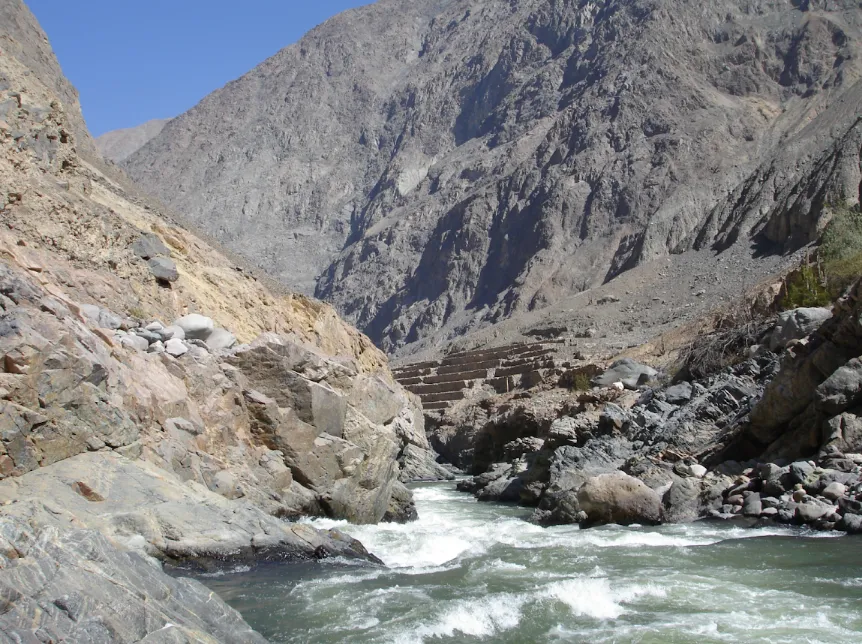
Many think the Rio Tambopata rafting trip is the best whitewater rafting and wildlife trip in the world. You begin near Lake Titicaca in the high Andes, and raft all the way into the Amazon rainforest. It is not unusual to see jaguar swimming across the river or prowling the banks. Monkeys, parrots, macaws, and a whole host of other birdlife provide color and sound for your last few days. And because you are traveling by raft, the wildlife seems to ignore you, which allows you to get great views from close up. The Tambopata rafting expedition is suitable for anyone confident in the water- you do not need to have rafted before.
Tt
The Marañon River – 7 to 30 days Class 2 to 5
Situated in the north of Peru, close to the border with Ecuador, the Marañon River offers you the opportunity to spend a month rafting 500 kilometers. Or you can choose different sections of the river if you do not have the time to do it all. The Class 5 sections will be portaged for safety reasons but the rapids throughout the rest of the river are enough to satisfy even the most experienced rafter.
This part of Peru is rarely visited by tourists, and the scattered villages along the way will be pleased and curious to see you. There were plans to build a set of hydro-electric dams along the river in 2014, thankfully protests by locals and the international rafting community helped avert this threat. This is a true wilderness expedition, and for keen rafters who can make the time, it could well be the trip of a lifetime. The Marañon River is suitable for anyone confident in the water- you do not need to have rafted before.
How to choose a safe Peruvian rafting company
Make sure the company you book with is specifically licensed to operate the raft trip you want to do.There are many companies willing to sell you a trip. But beware, most companies offering whitewater rafting in Peru are not actually licensed to do so and do not meet adequate safety standards. In 2018 following a series of fatal accidents in Peru, in rafting and other adventure activities, an Adventure Licencing Scheme was introduced. The aim is to increase the standard of safety and expertise. As a visitor, you can help this process by only using approved suppliers.
For your own safety, it is essential that you only use a company holding the necessary license when booking. Ask to see their specific rafting license before you book. Beware, many will show you their “Licencia de Funcionamiento” which is merely a business license. You need to see their “Certificado de Prestador de Servicios de Canotaje Turistico“.
Licenses are issued for certain rivers and certain sections of rivers. So each company is only allowed to operate the sections of the river that they hold a license for. Guides must also be licensed by the Peruvian Rafting Federation. Again, you can ask to see their license before you book. If you are buying your trip through an overseas company, ask to see the licenses of the local operator and guides they use.
What does a company have to do to get a Peru rafting licence?
The licensing process involves all guides undertaking an intensive three-day training course and a full inspection of the companies equipment to ensure it meets the required safety standards. However, the best companies were already operating at far higher standards even before the licensing process started and some of them feel the new regulations are not strict enough. It is important that you check who will actually be operating your trip. Many of the cheaper companies will sell you a trip, that they do not actually run themselves, passing you onto a company that pools clients together from various agencies. Avoid these companies.
Guides must have up to date First Aid certificates, and should also hold up to date Swift Water Rescue Technician certificates. In addition, they should have the necessary experience for the rivers they are working on.
How much should I pay to go white water rafting in Peru?
To offer rafting trips professionally and safely costs money. You should expect to pay the same price as you would in the USA or European countries. The cost of importing quality equipment and employing and training the appropriate level of guides means the prices are much higher than those of companies who work to lower standards. But your safety is not something to skimp on.
Why do some companies offer rafting in Peru much cheaper?
In short, because they are cutting corners. One of the big problems with whitewater rafting in Peru is the demand from certain sectors of visitors for unreasonably low-priced trips. Sadly, in such a competitive local market, there is always someone willing to cut corners in order to cut prices in order to meet that demand for unreasonably low prices. The end result is a lowering of standards of safety and service, which can only result in more accidents.
And while tourists may think they have the right to choose to compromise on safety and service if they wish, it is important to remember the local workers affected by these underpriced trips. Local guides are literally putting their lives at risk to provide these trips.
Many operators are sending guides out onto rivers that they are not experienced enough to guide, using equipment that is no longer safe, with too many clients in a boat, and not enough, or at times, without any safety kayakers, to provide cover should someone fall in the water and need to be rescued. And the chance of someone needing to be rescued is, in turn, greater because the guide is not experienced enough and the equipment is not up to standard and the raft is overloaded.
Is rafting in Peru safe?
Peru has a few excellent rafting companies that operate to the same high standards you will find in Europe and the United States so stick to booking with them. Their guides will often have worked around the world, in places such as New Zealand, The Alps, Chile, or the USA. As with any adventure activity, there is always a risk involved. No matter how good your guide and the company you book with, rafting carries an inherent risk. A good company should be willing to discuss this with you and make you aware of the inherent risks involved.
If a company tells you “Don`t worry, it is all completely safe, nothing can happen”, walk away. By making you aware of the risks involved, not only is a company being honest with you, but they are allowing you to play a role in managing that risk.
What is the weather like when rafting in Peru?
Most of Peru white water rafting takes place in river canyons, so can be pretty warm during the day. Although there can be a significant windchill in the afternoon as the wind picks up. Nights rarely drop below zero and can be quite warm. Check with your operator for the expected weather on your particular trip.
What should be included in a Peru rafting package?
Safety kayaker
It is imperative that any rafting trip you take includes a safety kayaker. Their job is to get you back in the boat should you fall out. It is much easier to manoeuver a kayak than a raft so they can pluck you out of the water to safety, much quicker than your raft can.
Safety equipment
Your life jackets should also be certified for white-water, in good condition, and replaced regularly in accordance with industry standards. You should also be given helmets, splash jackets to keep off the worst of the water and the wind, and long john wetsuits- which have long legs, but no arms, to allow for arm mobility while paddling.
Food
Lunch, snacks and drinking water should be included with one-day trips. All meals and drinking water should be included on multi-day trips, while on the river or in camp. If your package includes a town such as Cusco or Arequipa pre or post rafting, meals may not be included here, so check.
Camping equipment for multi-day rafting trips
Tents, sleeping mats, a dining tent and chairs and a portable toilet (so that waste can be packed out) should all be included. Sleeping bags are normally optional- either bring your own or hire one for an extra fee. A dry bag to put your personal kit in is normally given on multi-day trips but check
What do I need to pack for white water rafting in Peru?
Life on a Peru rafting trip does not require much clothing. Most areas where rafting takes place here are generally warm to hot in the day, and while they cool off once the sun drops, they rarely drop below freezing.
Your operator should provide:
- Wetsuits
- Splash jackets
- Wetsuit boots Drybags
- Some will have a special waterproof box for you to store a compact camera in.
- Check all the above with your rafting outfitter
To wear/ take on the river
- Long sleeve thermal top to wear under your long john wetsuit
- Swimming trunks/ costume to wear underneath
- Suitable shoes that grip in the water, if wetsuit boots are not provided by the company
- If wearing sandals, they should be the type that straps securely to your feet, such as TEVAs, rather than flip flops
- Sunglasses with retaining strap/ string
- Peaked hat
- Suncream- factor 40+
- Lip salve/ block
- Insect repellent- strong
- Water bottle with string to attach it
To wear in camp
- Long trousers
- A long sleeve shirt
- Shoes- can be old trainers or sandals and socks ( socks will stop the flies biting your ankles)
Additional items
- Sleeping bag
- Sleepwear
- Washkit
- Small towel
- Spare contact lenses/ glasses if worn
- Personal first aid kit to include painkillers, plasters (band-aids), moleskin, antiseptic cream, after-bite, anti-diarrhoea tablets, throat lozenges, rehydration salts & personal medication. (Outfitters should carry an extensive first aid kit on all trips, but this is generally for emergencies only)
How to find the best Peru white water rafting outfitters
The best Peru rafting outfitters are as good as any other in the world. Many of their guides have worked around the world, and some have competed at the international level too. The best Peru white water rafting operators are generally also members of APTAE, the Peruvian Association for Adventure and Eco-Tourism. However, you should still check they are licensed for the section of the river they are offering you. APTAE works to improve the standard of tourism offered here with special emphasis on improving safety and care for the environment.
Whitewater rafting in Peru is a fantastic way to experience the country in a unique way, gaining access to places that most visitors will never see. Just make sure you choose your outfitter wisely. If you do, then it is quite likely the rafting will be the highlight of your whole Peru trip.

Amazonas Explorer first began life as a Peru rafting outfitter, 30 years ago. We continue with the same mission as ever. To offer great Rafting in Cusco & Peru for people who want to raft in Peru as well and as safely as possible.


