
Lares vs. Inca Trail
The Lares Trek to Machu Picchu is a fantastic trek. It allows you to interact with local people as you pass through their pueblitos, deep in the mountains. Our favourite way to do the Lares Trek is to add the one-day Inca Trail Trek, KM104, onto it, so that you can appreciate the beauty and the culture of the Lares Trek while still enjoying the iconic moment of walking through the Sun Gate for your first glimpse at Machu Picchu.
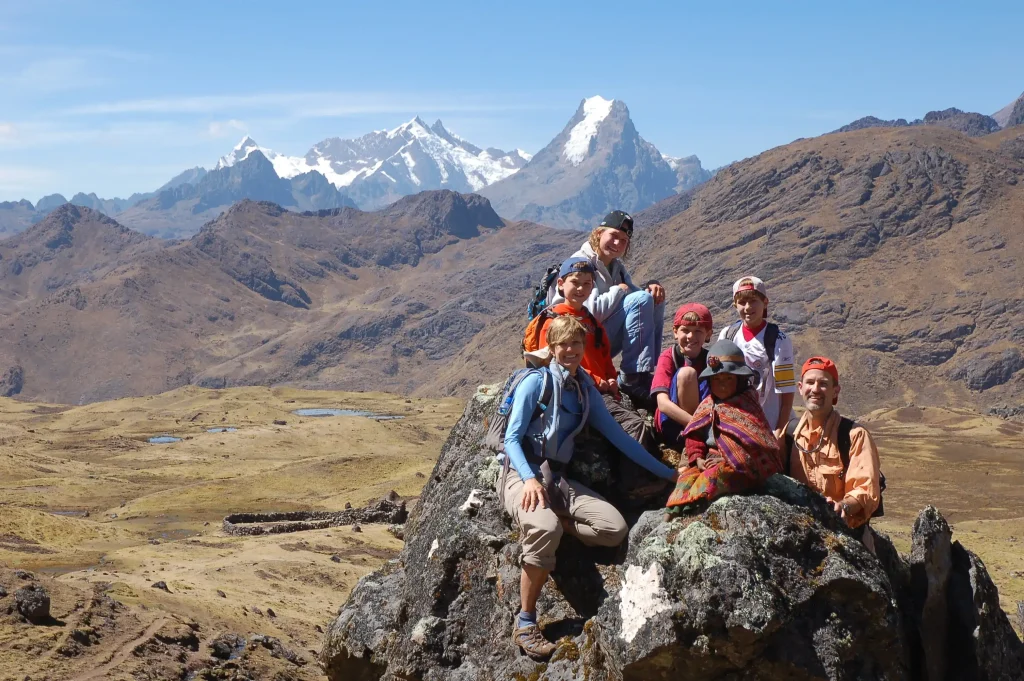
On the other hand, the Inca Trail is one of the most iconic treks, not just in Peru or even South America, but in the world. It follows along a real-life Inca Path, passing by ruins, through cloud forests and ecosystems, and offers a true pilgrimage to a world-famous landmark. It’s on many people’s bucket lists, and it deserves to be there. However, there are certainly pitfalls to choosing such a popular route. Read on to find out more.
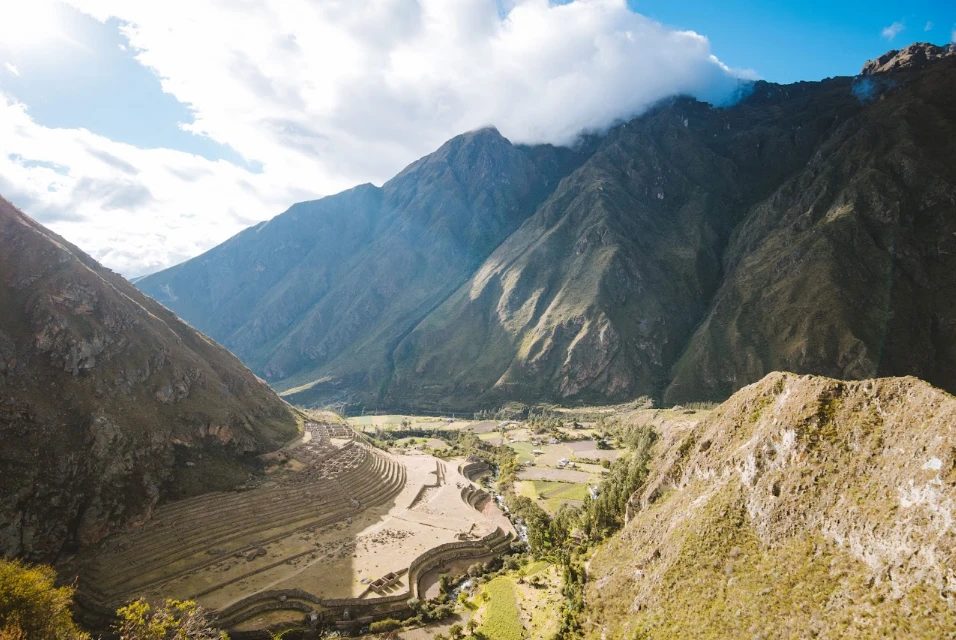
Is the Lares Trek Better than the Inca Trail?
That depends on your trekking preferences! Read the points below and decide for yourself to be sure you decide which is truly the best fit for you.
Lares Trek Permits are easier to get than the Inca Trail
Yes, the Inca Trail is world-famous. But there is an undeniable permit issue. With just 500 Inca Trail permits offered per day, and a majority of these going to the staff that accompanies trekkers (porters, guides, cooks, etc), permits sell out extremely quickly.
The KM104 Inca Trail permits have a special allocation of 250 permits and rarely sell out, making this a great option for those who are nervous about a longer trek but really want to hike some sort of Inca Trail. Although the Lares Trek, unlike the Inca Trail, never sells out as it is not a trek that requires permits- simply a hike through the beautiful Lares Valley.
You still get the Sun Gate and other Inca ruins on the Lares Trek
Many people have heard of the Sun Gate as the classic way to get your first sight of Machu Picchu, and it’s completely worth the hype. Hiking through the Sun Gate is a fantastic experience, and that’s why we love to add the KM104 one-day Inca Trail trek to Machu Picchu onto the classic Lares Trek. We believe that this combines the best of both worlds- history and culture. Plus, it’s pretty unlikely that you will ever do a trek into Machu Picchu again, so why not enjoy the best of both worlds?
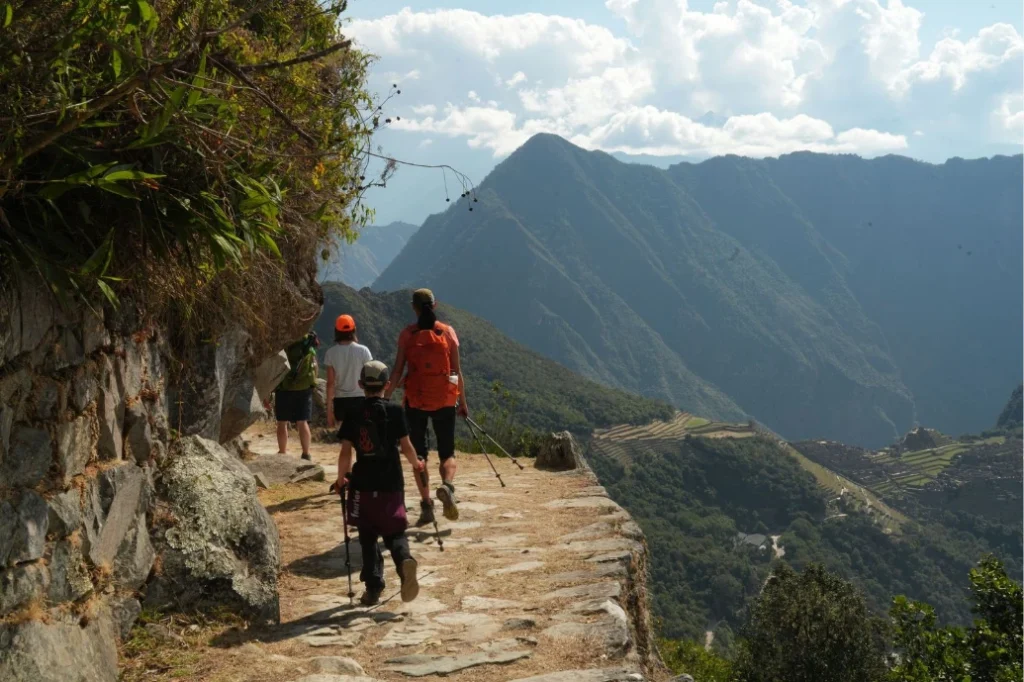
The Lares Trek only has two nights of camping, vs 3 or 4 on the Inca Trail
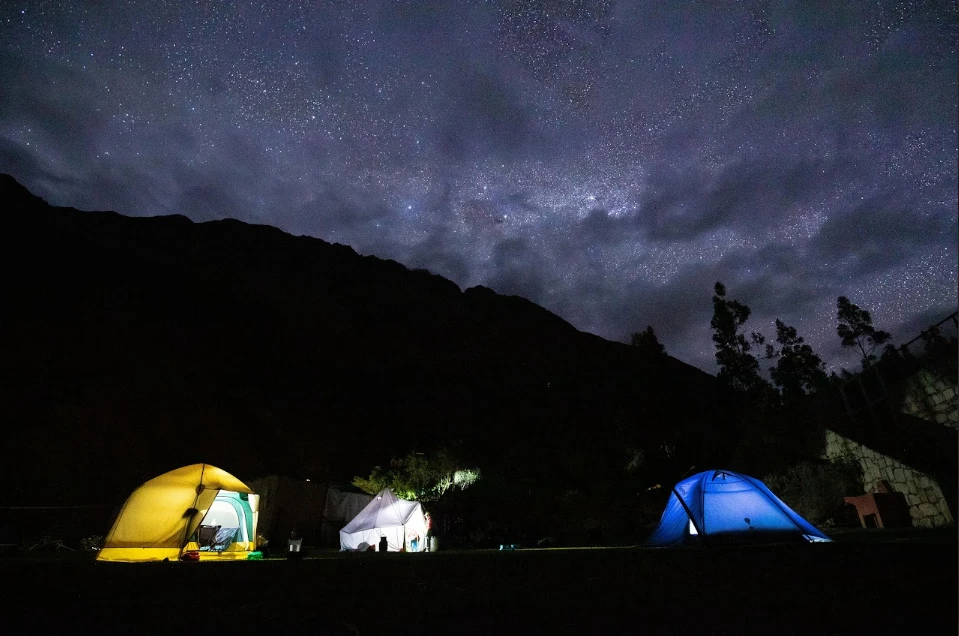
Not everyone likes camping! Even though we believe that camping in Peru is a different experience that everyone should try, some people simply are not interested in spending four days in a tent, which is required by the Inca Trail. So, the Lares Trek has just two nights of camping- just enough to see the beauty of the Milky Way and appreciate the silence and the dark of nighttime in Peru. (Plus, if you really, really hate camping, then we have a luxury camping option- complete with beds). The other two nights of the trek are spent in comfortable hotels along the route.
The Lares Trek is Easier than the Inca Trail
The Lares Trek is easier than Salkantay, Ausangate or Choquequirao to Machu Picchu, thus more suitable for a wider range of people.
If you are fit, healthy, and up for a challenge, then the Lares Trek might not offer enough of a challenge for you, making the Inca Trail a bit more your speed. However, if you’re nervous about altitude, rolling an ankle, or any of the potential pitfalls of the Inca Trail, then the Lares is a good alternative.
Far Fewer People Choose to do the Lares Trek than the Inca Trail
If you choose to do the standard four-day Inca Trail, your route and your campsites will be overflowing with other tourists- 499 other trekkers to be exact- as the 500 permits offered each day for the Inca Trail always sell out. We tend to avoid this problem by offering a 5-day Inca Trail instead of the usual 4-day route. This practically guarantees you the route to yourself.
However, the Lares Trek has practically no other hikers- a lot of companies choose slightly different routes- so the chances of you running into another group of hikers are almost non-existent. And isn’t that what hiking in Peru is about?
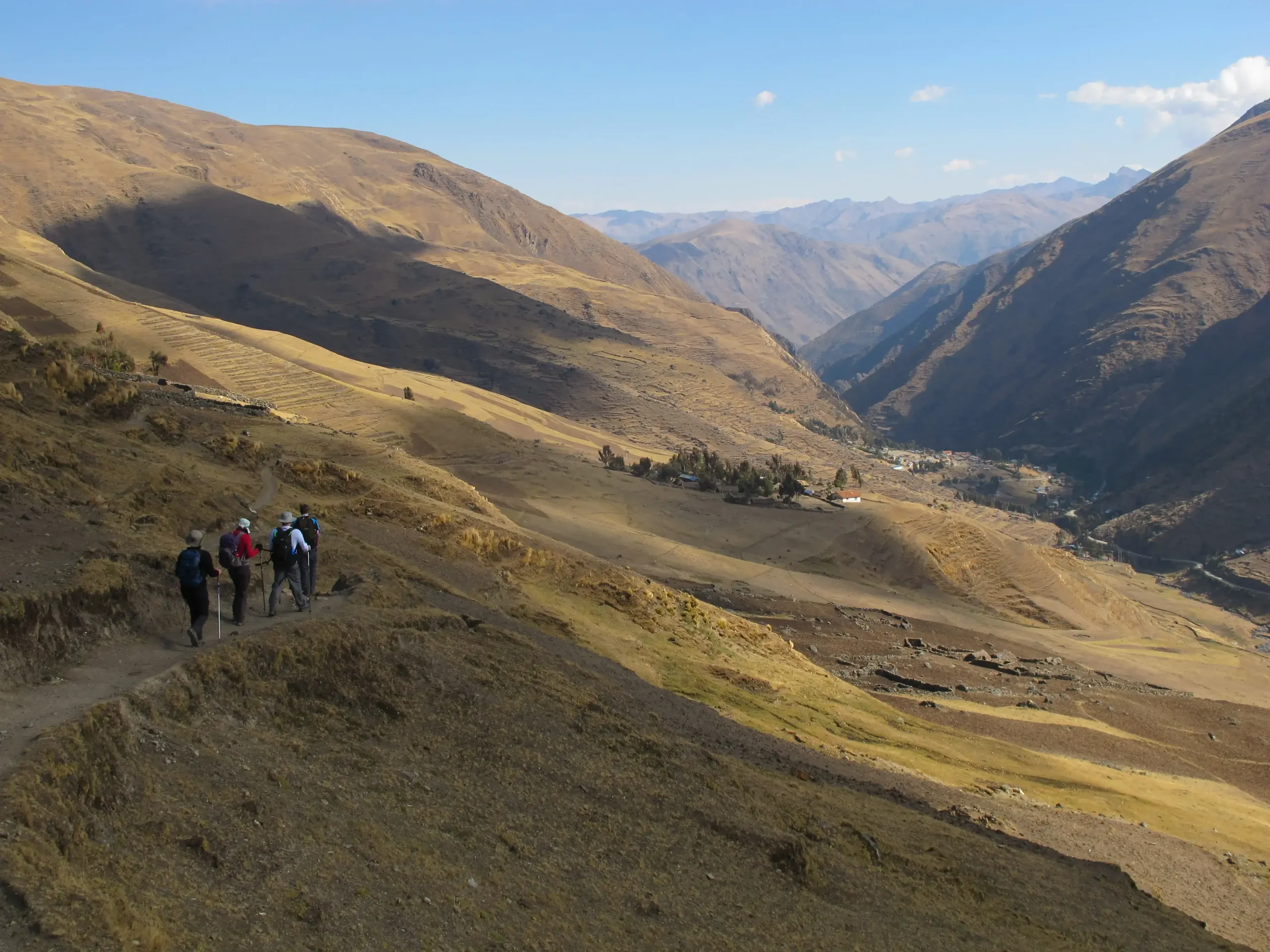
The Lares Trek has the best backup of any trek
The very nature of the Lares Trek means that a backup vehicle is never too far behind. That means that your night bags, food, water, and emergency help are never far away. This is not the same on the Inca Trail, which is one of the most difficult treks to evacuate from, as it does not allow mules, and there are no roads close by. On the Inca Trail, if you get into trouble, the only option you have is to be evacuated by a porter.
The Lares Trek is completely doable for almost anyone
The ascents and descents of the Lares Trek are reasonable. They are nowhere near as tough as the Inca Trail, Choquequirao, Ausangate or Salkantay. (You can read our head-to-head comparison of the Salkantay Trek and the Inca Trail here. During the Lares Trek, you walk for the most part on wide trails, where you can stroll two abreast, chatting away. The daily distance is not too far. It is only 4 days and 3 nights. And if you get tired, you can jump on a horse for a bit. It makes for the perfect achievable trek for everyone. Kids love it too. Yet it is also tough enough to feel like a good challenge for everyone.
This is not the case for the Inca Trail. The Inca Trail is a challenging hike, suitable for those who are reasonably fit and who are accustomed to the altitude in Cusco.
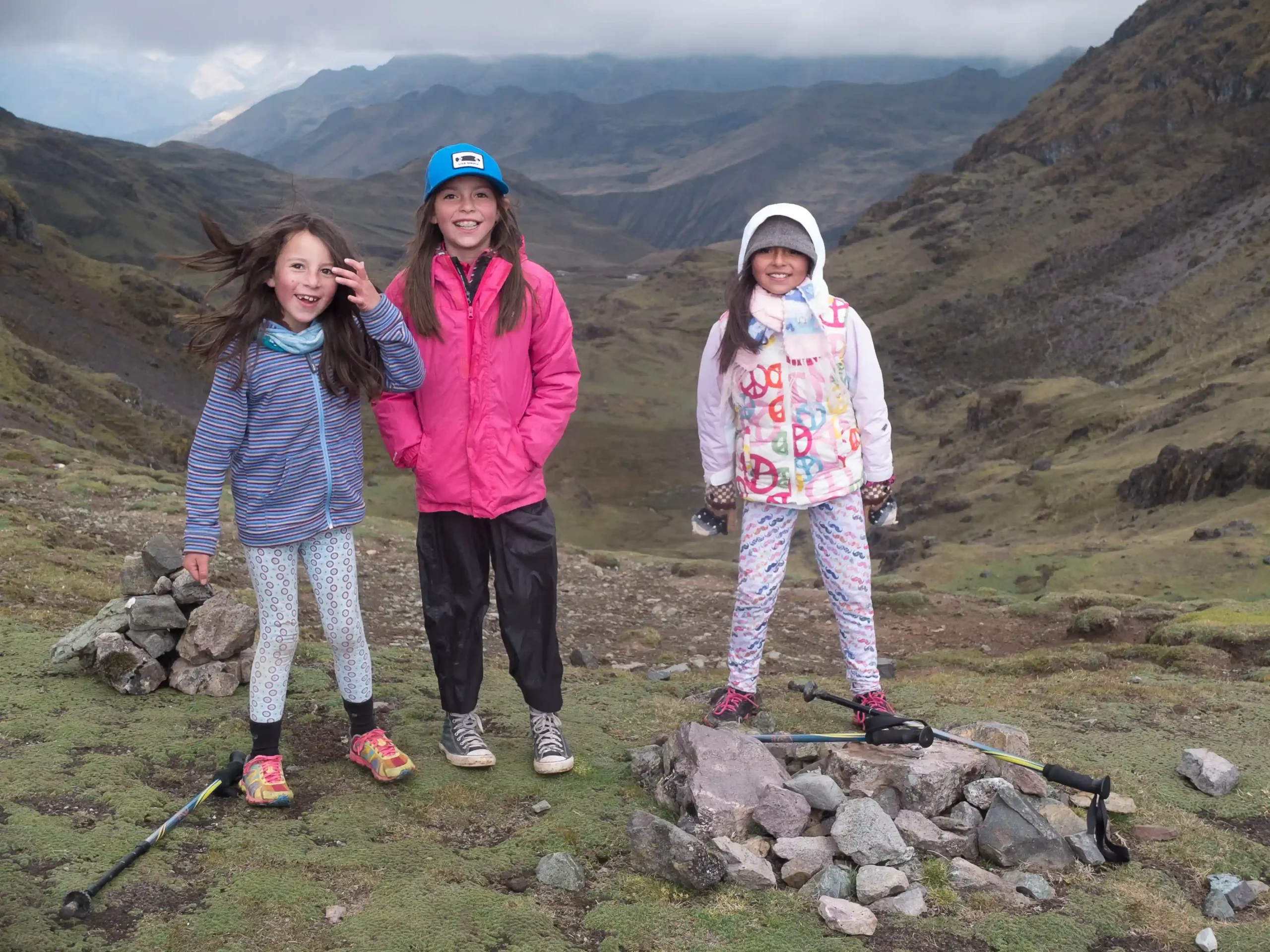
You have more comfort than on any other trek on the Lares Trek
This comfort comes down to the vehicles that accompany trekkers on the Lares. They can carry heavy items that would require huge teams of porters or horses. You also do not have to feel guilty when you are sitting there in luxury, worrying about who had to carry it, as you might on the Inca Trail, as the Inca Trail uses exclusively porters. If you appreciate your comforts and that your days of roughing it are behind you, the Lares Trek is a better choice than the Inca Trail. Having that extra comfort is great, and due to weight restrictions, it isn’t available on the Inca Trail.
- Lares offers more insight into Peruvian life than the Inca Trail
Travel is not just about seeing nice places. You will really appreciate the insights into local life you get. The Lares Valley is a fascinating place, untouched by time. It is the Peruvian equivalent of visiting the Masai or the Thai hill tribes before the crowds get there. The people of Lares are almost completely unchanged by tourism. No other trek has as many local villages en route.
The Inca Trail does not pass through any villages, but it is an interesting look into lives gone by and the history of the Incas. Whether you prefer to soak in the culture of now or the culture of times gone by will influence whether you prefer the Inca Trail or the Lares Trek.
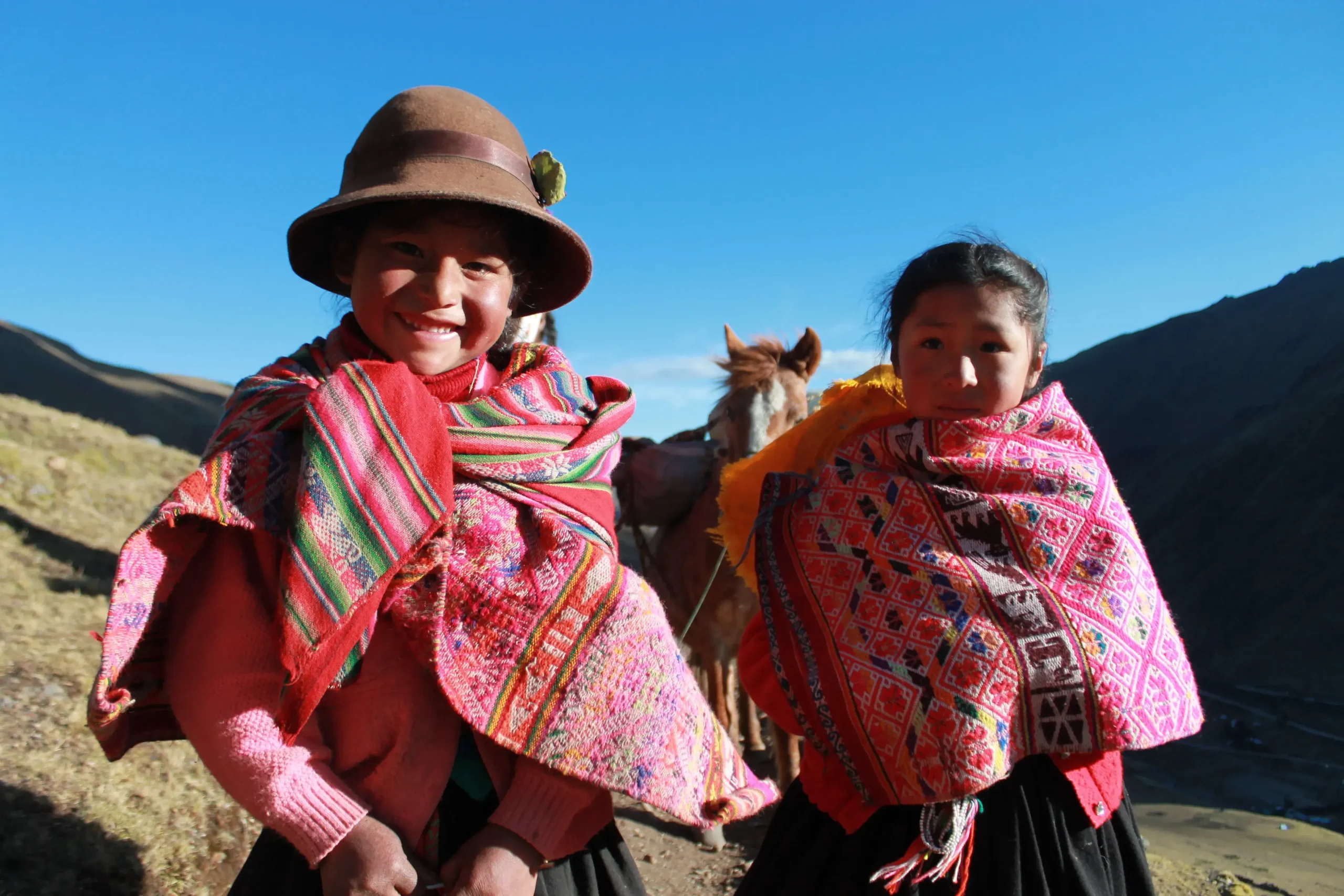
Because we have worked with the Lares communities for years, planting trees and helping them in other ways, such as donating laptops and photocopiers, you get special treatment. The locals see plenty of agencies coming through that do not care for them or the area at all. At Amazonas Explorer, we are one of the few who do, and as such, we get very well looked after by the communities. They give us the best campsites and do all they can to make your trek as enjoyable as possible.
So, while you do not have the amazing ancient ruins of the Inca trail, the huge glacial scenery of Ausangate or Salkantay, or the remoteness of Choquequirao, when it comes down to the modern-day traveller, Lares could well be the perfect option.


